









Most small businesses think they’re too small to be targeted. That’s the first mistake. Organizations faced an average of 1,925 cyber attacks per week in the first quarter of 2025. The attackers don’t care about your headcount or your annual revenue. They care about how easy you are to crack.

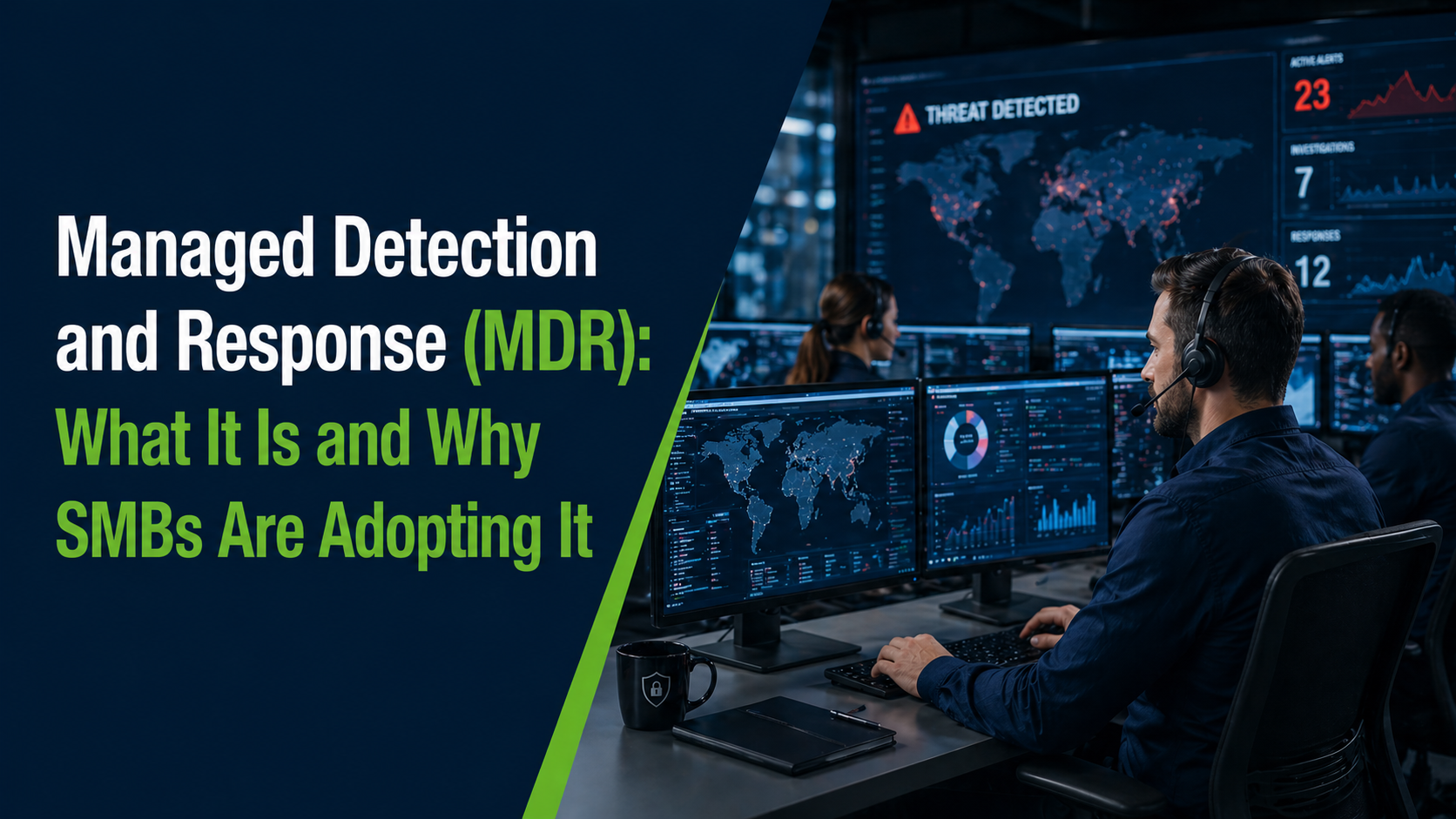
Managed Detection and Response, or MDR, is what happens when you pair smart technology with smarter people. It’s not just software. It’s not just a monitoring tool. It’s a full security operations capability delivered as a service, designed for businesses that can’t afford to staff a 24/7 SOC but can’t afford not to have one either.
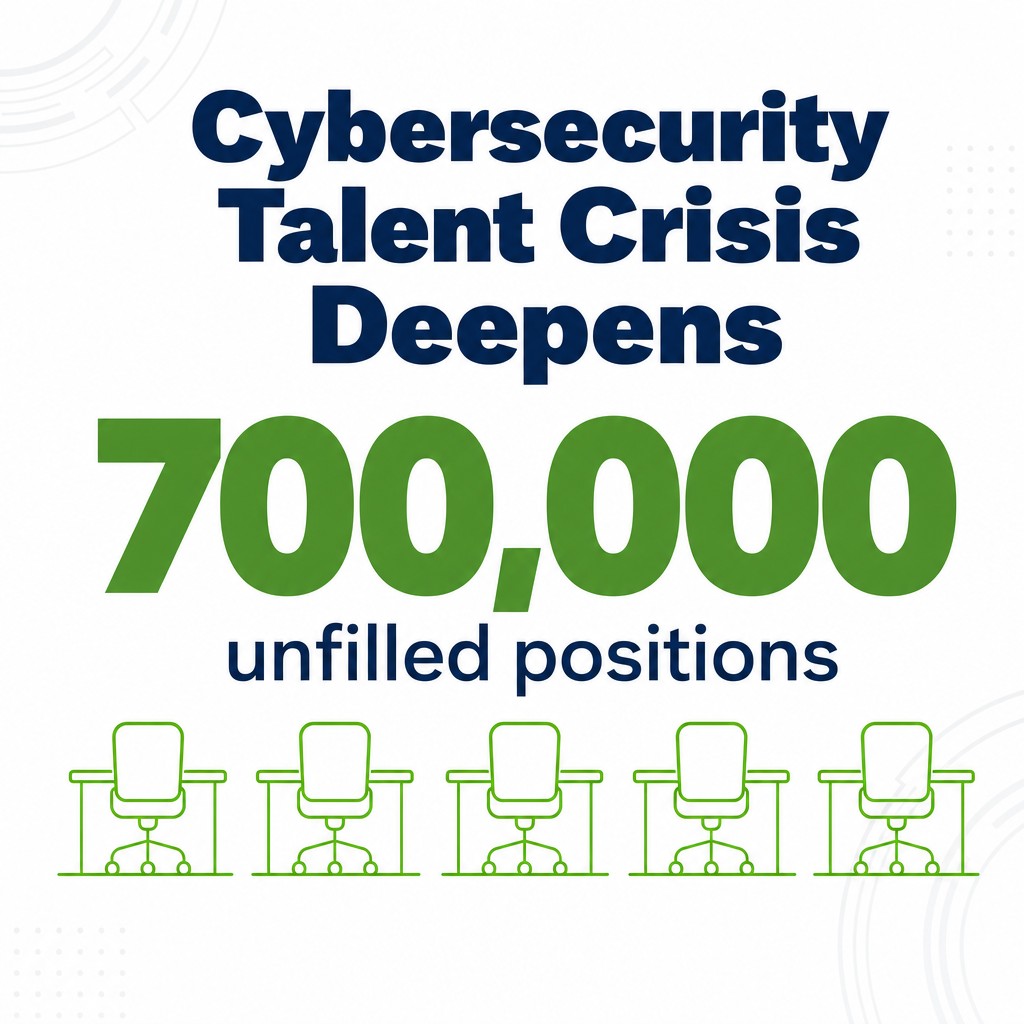
You get round-the-clock monitoring, expert threat hunters, incident responders who know what they’re doing, and technology that actually works together. All without hiring a team of six-figure cybersecurity specialists you can’t find anyway. The United States faces a cybersecurity workforce gap of over 700,000 unfilled positions.
This isn’t about ticking compliance boxes. It’s about protecting your business from threats that will shut you down. 60 percent of small businesses that experience a significant cyber incident go out of business within six months.

What Managed Detection and Response Actually Means
MDR combines three things: technology that monitors your environment, security analysts who investigate what matters, and incident responders who fix problems before they spread.
The technology part usually includes endpoint detection and response tools, network monitoring platforms, and sometimes SIEM systems that aggregate all your security logs. But tools alone don’t stop attackers. They generate alerts. Thousands of them. Most are noise.
That’s where the human expertise comes in. MDR providers employ security analysts who sort through alerts, identify real threats, and prioritize what needs immediate action. These aren’t junior analysts reading from scripts. They’re experienced professionals who understand attack patterns and know how adversaries operate.
When they find something real, they don’t just send you an email. They respond. That means containing the threat, isolating affected systems, and helping you remediate the problem. All of this happens around the clock, every day of the year.
The Core Components That Make MDR Work
MDR services build on several technology layers. Endpoint detection and response (EDR) monitors every device in your organization. Servers, laptops, mobile devices. It tracks what’s running, what’s connecting, and what’s trying to execute.
Network monitoring watches traffic patterns across your infrastructure. Unusual data transfers, suspicious connections, and lateral movement attempts all trigger investigation.
Some MDR providers also integrate extended detection and response (XDR) platforms. These correlate signals across endpoints, networks, email, and cloud environments. The goal is context. A failed login isn’t alarming. Ten failed logins from five countries in three minutes is.
Behind all this technology sits a security operations center staffed with analysts. They’re the difference between alert fatigue and actual threat detection. Your internal team can’t watch dashboards 24 hours a day. MDR teams can and do.
What Sets MDR Apart From Basic Monitoring
Basic monitoring tells you something happened. MDR tells you what it means and what to do about it.
Traditional security tools generate events. An antivirus program detects malware. A firewall blocks a connection. A SIEM creates an alert when logs match a rule. You get notifications. You’re still responsible for investigation, analysis, and response.
MDR takes ownership of the entire detection and response cycle. The service provider investigates every alert, determines if it’s a real threat, and takes action to stop it. You’re not managing security tools. You’re getting security outcomes.
This matters more as threats evolve. Ransomware features in 88 percent of all SMB-related data breaches. Modern attacks don’t trip simple signatures. They use legitimate tools, blend into normal traffic, and move slowly to avoid detection thresholds.

Stopping these attacks requires active threat hunting. MDR analysts search for indicators of compromise before automated systems alert. They look for anomalies in behavior, unusual patterns in data access, and subtle signs of reconnaissance.
How MDR Services Operate in Practice
Understanding how MDR works day-to-day helps clarify what you’re actually buying. It’s not a product you install. It’s a continuous operational capability delivered remotely.
Step 1: Deployment and Integration
The MDR provider deploys monitoring agents across your environment. Endpoints get EDR software. Network sensors connect to key traffic points. Cloud workloads get visibility tools. Everything feeds telemetry back to the provider’s SOC.
Integration with your existing tools matters. Most MDR services connect with your firewalls, identity systems, and cloud platforms. They’re not replacing everything. They’re adding expertise and 24/7 oversight to what you already have.
This deployment usually takes days, not months. You’re not building infrastructure. You’re connecting to a service that’s already running.
Step 2: Continuous Monitoring and Analysis
Once deployed, the MDR service watches everything. Every process execution, every network connection, every authentication attempt. The technology generates telemetry. The SOC team analyzes it.
Security analysts review alerts in real time. They apply threat intelligence, compare activity against known attack patterns, and investigate anything suspicious. Most alerts get dismissed after quick analysis. The few that matter get escalated.
This is where 24/7 coverage pays off. Attackers don’t work business hours. They strike when your team is asleep. MDR analysts are always watching.
Step 3: Threat Hunting and Investigation
Good MDR services don’t just respond to alerts. They hunt for threats proactively. Analysts search for indicators that might not trigger automated detection. They look for patterns that suggest reconnaissance, privilege escalation, or data staging.
When they find something, investigation begins. What systems are affected? How did the attacker get in? What are they trying to access? How long have they been present?
This context matters for response. You can’t contain a threat if you don’t understand its scope. MDR teams build that picture through forensic analysis and correlation across multiple data sources.
For businesses considering broader security improvements, proactive threat hunting has become a critical capability that separates reactive security from real protection.
Step 4: Incident Response and Containment
When a real threat is confirmed, the MDR team acts. They isolate compromised systems to prevent lateral movement. They block malicious domains and IP addresses. They disable compromised accounts.
Response speed matters. The faster you contain a threat, the less damage it causes. MDR teams can respond in minutes because they’re already monitoring your environment. They don’t need to gather context. They already have it.
Some MDR providers only recommend actions. Others take direct response steps with your pre-approval. The best services offer both options depending on threat severity and your preferences.
Step 5: Remediation Guidance and Reporting
After containment, you need to clean up. MDR providers guide remediation with specific steps. Remove malware. Patch vulnerabilities. Reset compromised credentials. Restore systems from clean backups.
You also get detailed incident reports. What happened, when it happened, how it was detected, and what actions were taken. This documentation helps with insurance claims, regulatory reporting, and improving your security posture.
The cycle then repeats. Monitoring resumes. Threat hunting continues. The MDR service keeps watching for the next attempt.
Why Small and Medium Businesses Are Choosing MDR
The economics of MDR make sense for businesses that can’t justify a full security team. Building an internal SOC isn’t realistic for most SMBs.
The True Cost of In-House Security Operations
The cost of building a fully functional SOC typically requires an initial infrastructure investment of USD 1 million to USD 2 million. That’s before you hire anyone.
Then you need staff. A minimal SOC requires security analysts for multiple shifts, threat intelligence specialists, incident responders, and management. You’re looking at at least five full-time employees with specialized skills that command premium salaries in a market where talent is scarce.
Contrast that with MDR pricing. MDR services typically charge USD 11 to USD 17 per device per month. For a business with 50 endpoints, that’s under $1,000 monthly for enterprise-grade security operations.
You get immediate access to experienced analysts, mature processes, and technology platforms without capital expenditure or hiring challenges. The value proposition is clear.
Access to Expertise You Can’t Hire
Even if you had the budget, finding qualified security talent is nearly impossible. The skills shortage isn’t improving. Experienced threat hunters and incident responders have multiple offers. They’re not choosing small businesses over enterprise opportunities.
MDR gives you access to that expertise as a shared service. The analysts monitoring your environment also monitor hundreds of other organizations. They see more attacks, handle more incidents, and develop better instincts than any single-company SOC could.
This experience translates to faster detection and more effective response. When your MDR team sees a novel attack technique against one client, they immediately apply that knowledge to protect all clients. You benefit from collective defense.
Reduced Alert Fatigue and Better Focus
Security tools generate overwhelming alert volumes. A typical SIEM deployment creates thousands of alerts daily. Most are false positives. Sorting through them exhausts internal teams and leads to missed threats.
MDR services handle this triage. Their analysts filter noise, investigate what matters, and only escalate genuine threats. Your team isn’t drowning in alerts. They’re getting actionable intelligence about real risks.
This lets your internal IT staff focus on what they do best. Infrastructure management, user support, and project delivery. They’re not becoming security analysts because you can’t afford dedicated ones.
Faster Time to Detection and Response
The speed advantage of 24/7 monitoring can’t be overstated. Attackers move fast once they gain access. Ransomware operators can encrypt entire networks in hours. Data exfiltration happens quickly.
Detecting threats within minutes instead of days or weeks dramatically reduces impact. The average ransom payment increased 500 percent to USD 2 million in 2024. Preventing ransomware execution is worth far more than any MDR subscription.
MDR provides that speed through continuous monitoring and immediate response capability. The SOC team is always working. Detection happens in real time. Response starts immediately.
Improved Compliance and Risk Management
Many regulatory frameworks require continuous monitoring, incident response capabilities, and detailed security logging. MDR helps meet these requirements without building internal capabilities from scratch.
Cyber insurance is another factor. Insurers increasingly require evidence of active threat detection and response. Some offer premium discounts for organizations using MDR services. The service can pay for itself through reduced insurance costs alone.
For SMBs facing compliance pressures, understanding why cybersecurity must be a business priority provides essential context for these decisions.
MDR vs EDR: Understanding the Difference
The confusion between MDR and EDR is understandable. The acronyms are similar. Both involve threat detection. But they’re fundamentally different offerings.
EDR is technology. Endpoint detection and response software runs on your devices and monitors for threats. It’s a tool you buy, deploy, and manage. You’re responsible for configuration, alert review, threat investigation, and incident response.
MDR is a service that typically includes EDR technology but adds the human expertise to operate it. You’re not managing the tool. You’re getting managed security operations delivered continuously by a team of analysts.
| Aspect | EDR | MDR |
|---|---|---|
| What it is | Endpoint security software | Managed security service |
| Who operates it | Your internal team | Provider’s SOC team |
| Coverage hours | When your team works | 24/7/365 |
| Alert management | You handle all alerts | Provider triages and investigates |
| Incident response | Your responsibility | Provider-led response |
| Staffing required | Security analysts needed | No additional staff needed |
Most businesses buy EDR and then realize they don’t have the expertise to use it effectively. The tool sits there generating alerts nobody investigates. Threats go undetected because there’s no one watching.
MDR solves this problem by providing the people and processes EDR needs to be effective. The technology becomes useful when experts operate it.
That said, EDR alone works for organizations with mature security teams who can handle 24/7 monitoring and response internally. If you have experienced analysts and established processes, EDR might suffice. For everyone else, MDR makes more sense.
MDR vs MSSP: How They Compare
Managed Security Service Providers (MSSPs) have existed longer than MDR. They typically manage security tools like firewalls, SIEM platforms, and vulnerability scanners. So why the distinction?
Traditional MSSPs focus on security management and monitoring. They watch your infrastructure, alert you to potential issues, and may provide some incident support. But responsibility for investigation and response often remains with you.
MDR services take ownership of the entire detection and response process. They don’t just monitor and alert. They investigate, hunt for threats, and respond to incidents. The service is outcome-focused, not tool-focused.
Many MSSPs now offer MDR capabilities. The market is converging. When evaluating providers, focus on what they actually do, not what they call themselves. Do they just monitor, or do they investigate and respond? Who’s responsible when a threat is detected?
The best providers combine MSSP capabilities with true MDR. They manage your security tools and provide expert-led detection and response. You get both infrastructure management and active threat defense.
For businesses exploring managed security options more broadly, understanding the full spectrum of managed cybersecurity services helps clarify which approach fits your needs.
MDR vs XDR and MXDR: Extended Detection Capabilities
Extended Detection and Response (XDR) platforms correlate security data across multiple sources. Not just endpoints, but networks, email, cloud workloads, and identity systems. The goal is better threat visibility through data integration.
XDR is technology. It’s a platform that connects security tools and analyzes activity across them. You still need someone to operate that platform, investigate alerts, and respond to threats.
That’s where Managed XDR (MXDR) comes in. It’s MDR services delivered using XDR technology. You get the extended detection capabilities of XDR plus the 24/7 SOC team to operate it.
The distinction matters less than the outcome. What you need is comprehensive visibility across your environment and expert-led response. Whether that’s delivered as MDR with integrated tools or MXDR with an XDR platform, the result should be the same.
When evaluating services, ask what data sources they monitor. Endpoint-only MDR misses network-based attacks and email threats. Services that integrate multiple detection layers provide better coverage.
MDR vs SIEM: Different Purposes, Complementary Roles
Security Information and Event Management (SIEM) systems collect and analyze security logs from across your infrastructure. They correlate events, create alerts based on rules, and provide dashboards for security teams.
SIEM is a tool for log aggregation and analysis. It helps security teams investigate incidents and identify patterns. But it doesn’t respond to threats. It creates alerts that humans must investigate.
MDR is a service that may use SIEM technology as part of its monitoring stack. But MDR adds the analysts, threat hunters, and incident responders that SIEM lacks. The service provides what SIEM alone cannot: expert-led investigation and response.
Many MDR providers integrate with your existing SIEM if you have one. The SIEM becomes a data source for the MDR platform. You’re not replacing tools. You’re adding the expertise to use them effectively.
For organizations without SIEM, MDR providers typically include log analysis capabilities as part of the service. You get the security monitoring benefits without deploying and managing a SIEM platform yourself.
The question isn’t MDR or SIEM. It’s whether you have the team to operate a SIEM effectively. If not, MDR gives you the outcomes SIEM promises but rarely delivers without expert operators.
Selecting an MDR Provider That Actually Fits
Not all MDR services are equal. Provider capabilities vary significantly. Choosing the wrong one leaves you exposed despite paying for protection.
Technology Coverage and Integration
Start with what the MDR service actually monitors. Endpoint-only coverage misses network attacks, email threats, and cloud compromise. You need visibility across your entire attack surface.
Ask about technology integration. Can the provider work with your existing security tools? Do they replace everything, or do they add to what you have? Rip-and-replace approaches are expensive and disruptive.
Cloud coverage matters increasingly. If you run workloads in AWS, Azure, or Google Cloud, your MDR provider should monitor those environments. Cloud attacks are different from on-premises threats.
SOC Team Expertise and Availability
The quality of the SOC team determines the quality of the service. What certifications do their analysts hold? How much experience do they have? What’s their average time with the company?
High analyst turnover indicates problems. You want experienced teams, not constantly rotating junior staff. Ask about team tenure and training programs.
Verify 24/7 coverage is real. Some providers claim round-the-clock monitoring but only staff nights and weekends with skeleton crews. Response quality should be consistent regardless of when an incident occurs.
Response Capabilities and Procedures
Understand what the provider actually does when they detect a threat. Do they take direct response actions, or just recommend them? How quickly do they respond to critical threats?
Get clarity on response procedures. Who approves containment actions? What happens if your team is unreachable? Can the provider isolate systems immediately to prevent spread?
Review their incident escalation process. How do they communicate during active incidents? What information do you receive and how quickly?
Threat Intelligence and Hunting Programs
Good MDR providers maintain active threat intelligence programs. They track emerging threats, monitor threat actor tactics, and apply that intelligence to your defense.
Ask about their threat hunting approach. How often do they hunt? What methodologies do they use? Can you request focused hunts based on specific concerns?
Threat intelligence should be applied, not just collected. The provider should use intelligence to improve detection rules, guide hunting activities, and prioritize vulnerabilities.
Reporting and Communication Standards
You need visibility into what the MDR service is doing. Regular reporting should include detected threats, investigation outcomes, and security posture improvements.
Incident reports should be detailed and actionable. What happened, how it was detected, what actions were taken, and what you need to do next. Vague summaries don’t help.
Communication style matters. Do you get a dedicated account team? How do you escalate concerns? What’s their response time for non-emergency questions?
Pricing Structure and Contract Terms
MDR pricing models vary. Per-device pricing is common. Some providers charge based on data volume or number of users. Understand what’s included in base pricing and what costs extra.
Watch for hidden costs. Are response actions included or billed separately? Do you pay extra for threat hunting? What about additional integrations?
Contract terms matter. What’s the commitment period? How does pricing change at renewal? What happens if you need to scale up or down?
For SMBs evaluating cost-effective security approaches, exploring practical solutions that fit tighter budgets provides useful perspective.
Implementation Without Disruption
Deploying MDR doesn’t mean shutting down operations for weeks. Good providers make the process smooth.
Initial assessment happens first. The provider inventories your environment, identifies what needs monitoring, and plans sensor deployment. This usually takes a few days.
Agent deployment comes next. Endpoint agents get installed on workstations and servers. Network sensors connect to traffic flow. Cloud integrations get configured. Most of this happens remotely without user disruption.
Baseline establishment follows. The MDR team learns your normal activity patterns to distinguish legitimate behavior from threats. This learning period typically runs two to four weeks.
During baseline, the service is live but may generate more false positives as it tunes to your environment. The SOC team adjusts detection rules based on what they see.
Full operational capability usually arrives within 30 days of kickoff. You’re getting monitored from day one, but detection accuracy improves as the service learns your environment.
Plan for ongoing tuning. As your environment changes, the MDR service adapts. New applications, infrastructure changes, and business shifts require detection rule updates.
What Success Actually Looks Like
How do you measure MDR effectiveness? It’s not just about blocked threats. The best measure is incidents that never happen because threats were stopped early.
Track mean time to detect (MTTD) for threats that slip past prevention. Good MDR services detect compromise in minutes to hours, not days or weeks.
Mean time to respond (MTTR) matters more. Detection is worthless without fast containment. Your MDR provider should respond to critical threats within minutes of confirmation.
Monitor false positive rates in your reporting. High false positives indicate poor tuning. Your team shouldn’t be constantly interrupted for non-threats.
Review threat hunting outcomes. Regular hunts should occasionally find something. If hunts never discover dormant threats, the provider might not be hunting effectively.
The ultimate measure is business continuity. Has ransomware disrupted operations? Have you suffered data breaches? Are compliance requirements met?
Ransomware attacks disrupted 389 U.S. hospitals in 2024. Healthcare organizations with effective MDR avoided becoming statistics. That’s what success looks like.
The Adoption Trend Among Small Businesses
SMB adoption of MDR is accelerating. SMB awareness of MDR surged from 39 percent in 2023 to 61 percent in 2025. Businesses are recognizing that basic security tools aren’t enough.
Several factors drive this shift. Cyber insurance requirements are tightening. Insurers want evidence of active monitoring and response capabilities. MDR satisfies that requirement affordably.
Regulatory pressure is increasing. Data protection laws demand reasonable security measures. For small businesses, MDR provides demonstrable security controls without massive investment.
The threat environment continues worsening. Ransomware gangs target small businesses explicitly because defenses are weaker. Traditional security approaches fail against modern attacks.
The global MDR market reached USD 5.09 billion in 2026 and is projected to grow to USD 13.45 billion by 2031 at a compound annual growth rate of 21.45 percent. This growth reflects business reality: MDR works.

Early adopters report significant benefits. Faster threat detection, reduced security workload for IT staff, and improved confidence in their security posture. The service pays for itself by preventing incidents that would cost far more.
Businesses exploring fundamental security improvements should understand why proactive measures matter more than reactive responses in today’s threat environment.
Common Concerns and Practical Answers
Businesses considering MDR have legitimate questions. Address them before signing anything.
Won’t this be too expensive for our budget?
MDR costs less than a single security analyst’s salary. Compare the per-device monthly fee to the cost of building internal capability. Factor in what a breach would cost. The economics favor MDR for most SMBs.
Will we lose control of our security?
You’re gaining control, not losing it. You define policies and approval requirements. The provider operates within your guidelines. You maintain oversight through reporting and regular reviews.
What if the provider misses something?
No security approach is perfect. MDR dramatically reduces risk but doesn’t eliminate it. Review the provider’s SLAs and incident response guarantees. Understand their liability and insurance coverage.
How do we know they’re actually monitoring?
Demand regular reporting. Monthly summaries should show alerts investigated, threats detected, and hunting activities performed. Request a test: have them explain specific alerts from your environment.
Can we switch providers if it doesn’t work out?
Check contract terms carefully. What’s the commitment period? What are termination clauses? How portable is the technology if you change providers?
For businesses facing broader security challenges, understanding the specific threats targeting small businesses helps contextualize why MDR addresses real risks.

Making the Decision
MDR isn’t right for every organization. Businesses with mature security teams and 24/7 SOC capability might not need it. Everyone else should seriously consider it.
The threat environment demands continuous monitoring and expert response. You can’t protect what you can’t see. You can’t respond to threats you don’t understand.
Building internal capability takes years and costs millions. Most small businesses will never achieve it. MDR provides that capability immediately at a fraction of the cost.
Start by assessing your current state. What monitoring do you have? Who investigates alerts? How quickly can you respond to incidents? If the answers expose gaps, MDR fills them.
Evaluate a few providers. Compare their coverage, team expertise, and response capabilities. Don’t choose based on price alone. The cheapest option probably cuts corners that matter.
Run a proof of concept if possible. Some providers offer trial periods. See how they operate in your environment before committing.
For comprehensive security planning, businesses should consider how managed services fit into broader cybersecurity strategy rather than viewing MDR as an isolated solution.
The question isn’t whether you need better detection and response. You do. The question is whether you’ll build it or buy it. For most businesses, buying makes more sense.
Understanding how SMEs can solve cybersecurity challenges in 2025 requires acknowledging that expert help often outperforms stretched internal teams.
Make the decision based on risk, not budget alone. What would a ransomware incident cost? What about a data breach? Compare that to MDR pricing. The math works.

