










Here’s a question that stumps many IT professionals: what malware type focuses entirely on network propagation? The answer is simpler than most people think, but the implications are far more serious than many businesses realize.
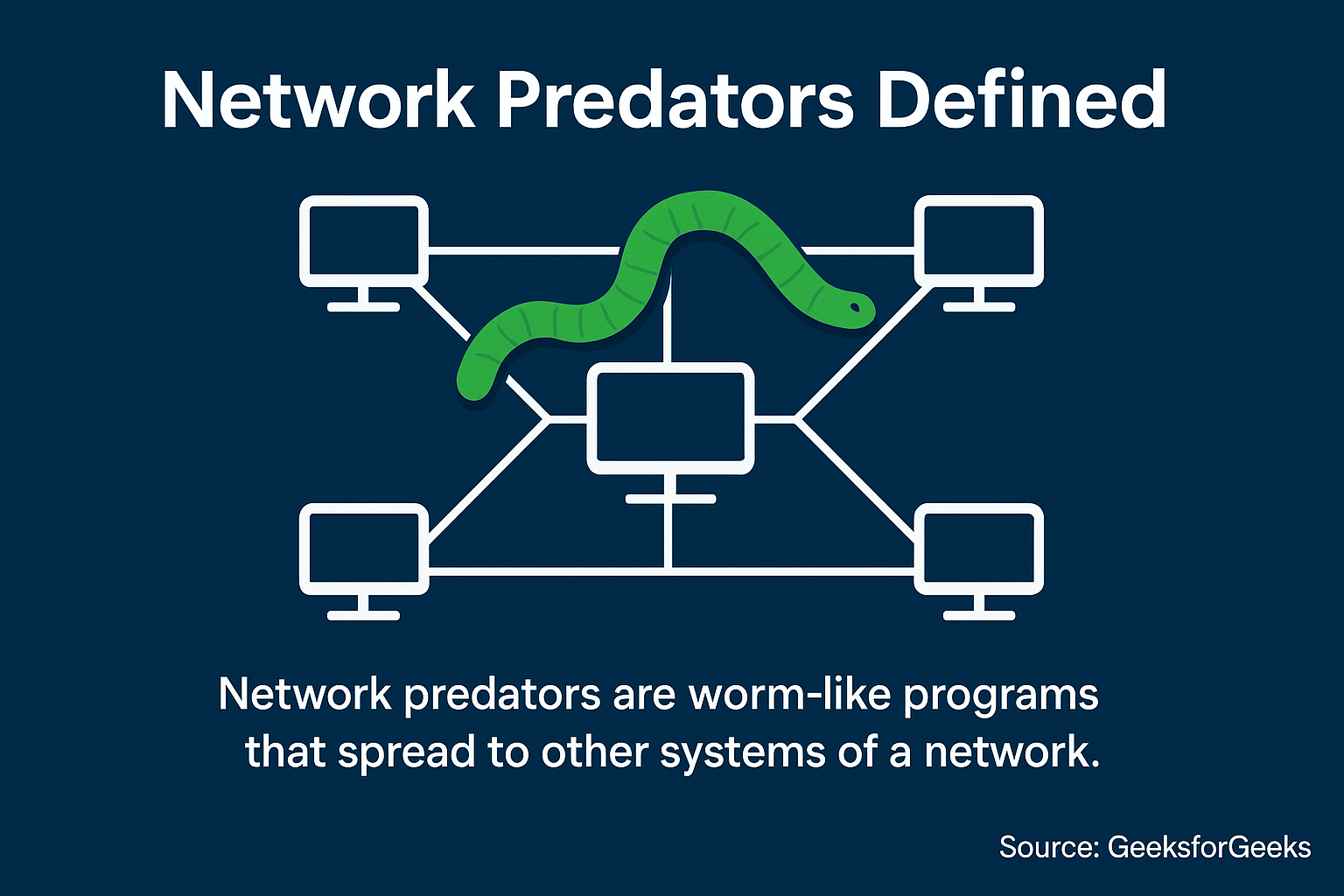
Computer worms are the malware type whose primary objective is spreading across networks (Source: GeeksforGeeks). Unlike viruses that need host files or user actions to spread, worms are self-contained programs designed for one thing: rapid network propagation. They scan for vulnerable systems and automatically copy themselves across networked environments without any user interaction required.
This makes worms particularly dangerous for businesses. While other malware waits for someone to click a file or visit a website, worms actively hunt for ways into your network. They exploit security weaknesses in network services and protocols, turning your connected systems into launching pads for further attacks.
Understanding how worms operate, what makes them different from other threats, and how to protect against them isn’t just technical knowledge. It’s essential business intelligence that can save your organization from network-wide disruption.
What are Computer Worms? The Network Predators
Computer worms are standalone malware programs that self-replicate and spread across computers and networks without requiring a host file or user interaction (Source: GeeksforGeeks). Think of them as digital parasites that don’t just infect one system. They actively seek out new hosts across your entire network.
What sets worms apart is their autonomous nature. Once activated, they scan network connections, probe for vulnerabilities, and automatically copy themselves to any accessible system. This self-replicating behavior means a single infected machine can compromise hundreds of networked devices within hours.
The following table breaks down the core characteristics that make worms uniquely dangerous:
| Characteristic | Description | Business Impact |
| Self-replicating | Copies itself without user action | Rapid network-wide infection |
| Autonomous | Operates independently once activated | Spreads during off-hours undetected |
| Network-focused | Designed specifically for network propagation | Can overwhelm network resources |
| Vulnerability exploitation | Targets unpatched systems and services | Exposes security gaps across infrastructure |
Many worms carry additional payloads such as backdoors, data theft modules, or denial-of-service launchers (Source: GeeksforGeeks). This means the initial network spread is just the beginning. The real damage often comes from what the worm does after it establishes itself on your systems.
How Worms Differ from Viruses and Other Malware
Here’s where most people get confused about malware types. Worms, viruses, and trojans all cause damage, but they spread in fundamentally different ways. Understanding these differences is crucial for effective protection.

Worms are standalone programs that don’t attach to other files, while viruses require a host file or program to spread (Source: GeeksforGeeks). This independence makes worms far more aggressive in their spreading behavior. They don’t wait for you to open an infected file. They actively seek out network paths to new targets.
The key differences between worms and other malware types include:
- Propagation method: Worms spread without user action by exploiting network vulnerabilities, while viruses typically need user actions like opening infected files
- Host dependency: Worms operate independently, while viruses attach to legitimate programs or files
- Speed of spread: Worms can infect entire networks within hours, while viruses spread more slowly through user activity
- Network impact: Worms commonly cause large-scale, fast-moving network disruptions due to their scanning and replication activities
- Detection complexity: Worms generate network traffic that can overwhelm monitoring systems, making them harder to contain once active
Unlike trojans that rely on social engineering to trick users into execution, worms exploit technical vulnerabilities directly. This makes them particularly dangerous for organizations with multiple attack vectors across their network infrastructure.
Network Propagation Methods
Worms use several sophisticated methods to spread across networks. They exploit unpatched network services or operating system vulnerabilities to move laterally between systems (Source: SentinelOne). This automated scanning process allows them to identify and compromise vulnerable hosts without any human intervention.
The most common propagation techniques include automated network scanning to find open ports and services, exploitation of known vulnerabilities in network protocols, and abuse of legitimate network administration tools. Some advanced worms even use email systems to distribute themselves, though they don’t require user assistance to spread once initially activated (Source: Adelphi University).
Famous Worm Attacks and Their Impact
Real-world examples show just how devastating network-spreading malware can be. These aren’t theoretical threats. They’re documented cases that brought down major systems and cost organizations millions in recovery efforts.

Code Red struck in 2001, exploiting vulnerabilities in Microsoft IIS servers. It infected over 350,000 systems within hours (Source: GeeksforGeeks). The worm’s rapid spread demonstrated how quickly unpatched network services could become attack vectors for entire organizations.
The following table shows how major worm attacks evolved in sophistication and impact:
| Worm Name | Year | Propagation Method | Impact Scale |
| Code Red | 2001 | Microsoft IIS vulnerability | 350,000+ systems in hours |
| SQL Slammer | 2003 | SQL Server buffer overflow | Global internet congestion in minutes |
| Stuxnet | 2010 | Industrial control system targeting | Critical infrastructure disruption |
SQL Slammer spread even faster, causing major internet congestion within minutes of release (Source: GeeksforGeeks). This worm targeted SQL Server vulnerabilities and demonstrated how network-dependent businesses had become. When the worm overwhelmed network capacity, entire regions lost internet connectivity.
Stuxnet represents the most sophisticated worm deployment to date. Released in 2010, it specifically targeted industrial control systems (Source: GeeksforGeeks). This attack showed how worms could be weaponized against critical infrastructure, moving beyond simple disruption to cause physical damage.
These examples represent just a fraction of documented worm attacks. They’re among the most common threats organizations face, yet many businesses remain unprepared for their rapid spread and network-wide impact.
Understanding Worm Payloads
The network spread is often just the delivery mechanism. Many worms carry destructive payloads that activate after successful propagation. These payloads can install backdoors for remote access, delete or steal sensitive files, or launch coordinated denial-of-service attacks against external targets.
Fast-spreading worms can overwhelm network infrastructure through their replication activities alone (Source: SentinelOne). This means even if the payload isn’t immediately destructive, the worm’s spreading behavior can bring down network services and disrupt business operations.
Protection Strategies Against Network-Spreading Malware
Here’s what you need to do right now to protect against worms. These aren’t suggestions for someday implementation. They’re immediate actions that can prevent network-wide compromise.
Timely patching stands as your first line of defense. Worms exploit known vulnerabilities in network services and operating systems (Source: SentinelOne). Every day you delay patches is another day your network remains vulnerable to automated scanning and exploitation.
Network defenses must detect and block the anomalous scanning activity that worms generate during propagation (Source: SentinelOne). This requires monitoring tools that can identify unusual network traffic patterns and automatically isolate infected systems before they spread further.
| Format Type | Idea |
| LinkedIn Carousel | “Computer Worms: The Malware That Spreads Like Wildfire” – slides for definition, how they spread, famous examples, prevention tips |
| Twitter/X Thread | “Worms aren’t just a virus cousin—they’re network predators” – explain differences, famous attacks, and defenses in 10 tweets |
| Instagram Reel | “The Malware That Can Take Over Your Entire Network in Hours” – quick animation of worm spread with top 3 prevention tips |
| Email Newsletter | “Worm Alert: The Malware Every IT Team Should Fear” – condensed guide with links to full article |
| Downloadable PDF | “Worm Defense Playbook” – includes attack case studies, vulnerability checklist, and response plan template |

Essential protection measures include:
- Immediate patch deployment: Prioritize security updates for network services and operating systems
- Network segmentation: Limit worm spread by isolating critical systems from general network access
- Anomaly detection: Deploy monitoring that identifies unusual scanning and connection patterns
- Automated response: Configure systems to isolate infected machines when worm activity is detected
- Regular vulnerability assessment: Identify and close security gaps before worms can exploit them
Special attention should be paid to remote work environments, where traditional network perimeters don’t exist. Worms can use remote connections as entry points into corporate networks, making endpoint security critical for distributed teams.
Enterprise Network Considerations

In enterprise environments, worms can overwhelm an entire corporate network within hours through lateral movement across interconnected systems (Source: SentinelOne). This rapid spread means traditional incident response timeframes are insufficient for worm containment.
Organizations need automated response capabilities that can isolate infected systems faster than the worm can spread. This requires network architecture designed for rapid quarantine and security tools that can make isolation decisions without human intervention.

Why Worms Remain a Critical Threat
Here’s the reality most security vendors won’t tell you: network-spreading malware isn’t going away. As businesses become more connected and dependent on networked systems, the attack surface for worms continues to expand.
Worms represent a fundamental challenge because they exploit the same network connectivity that modern businesses require for operation. You can’t simply disconnect systems to prevent worm spread without disrupting legitimate business functions. This creates an ongoing tension between security and operational requirements.
The rise of cloud computing and hybrid work environments has created new opportunities for worm propagation. Traditional network boundaries no longer exist, and many organizations lack visibility into all their connected systems. This expanded attack surface combined with the speed of modern networks means worms can spread faster and farther than ever before.
Modern Worm Evolution
Today’s worms are becoming more sophisticated in their targeting and evasion techniques. They use encrypted communications to hide their network traffic and employ legitimate system tools to blend in with normal network activity. Some variants even include artificial intelligence components that help them identify the most valuable targets for compromise.
The integration of multiple threat vectors into single worm packages means organizations face compound risks. A modern worm might combine network propagation with data theft, credential harvesting, and ransomware deployment in a single attack chain.
What’s your current network monitoring capability? If you can’t detect unusual scanning activity within minutes of it starting, you’re already behind in the race against worm propagation. The time to strengthen your defenses isn’t after an infection. It’s right now, while your network is still clean.
Network-spreading malware will continue to evolve, but the fundamental protection principles remain constant: patch quickly, monitor closely, and respond faster than the threat can spread. Those organizations that implement these basics will find themselves far better prepared for whatever worm variants emerge next.

