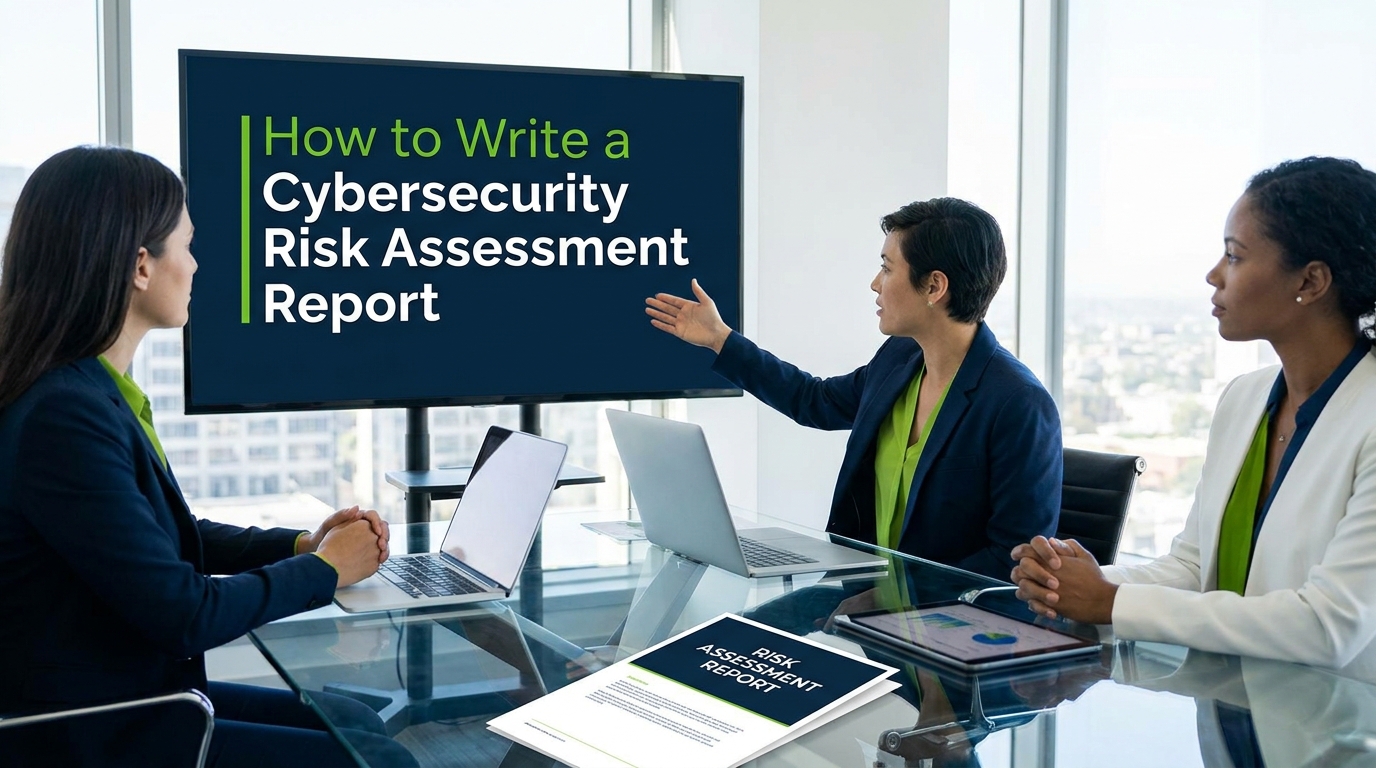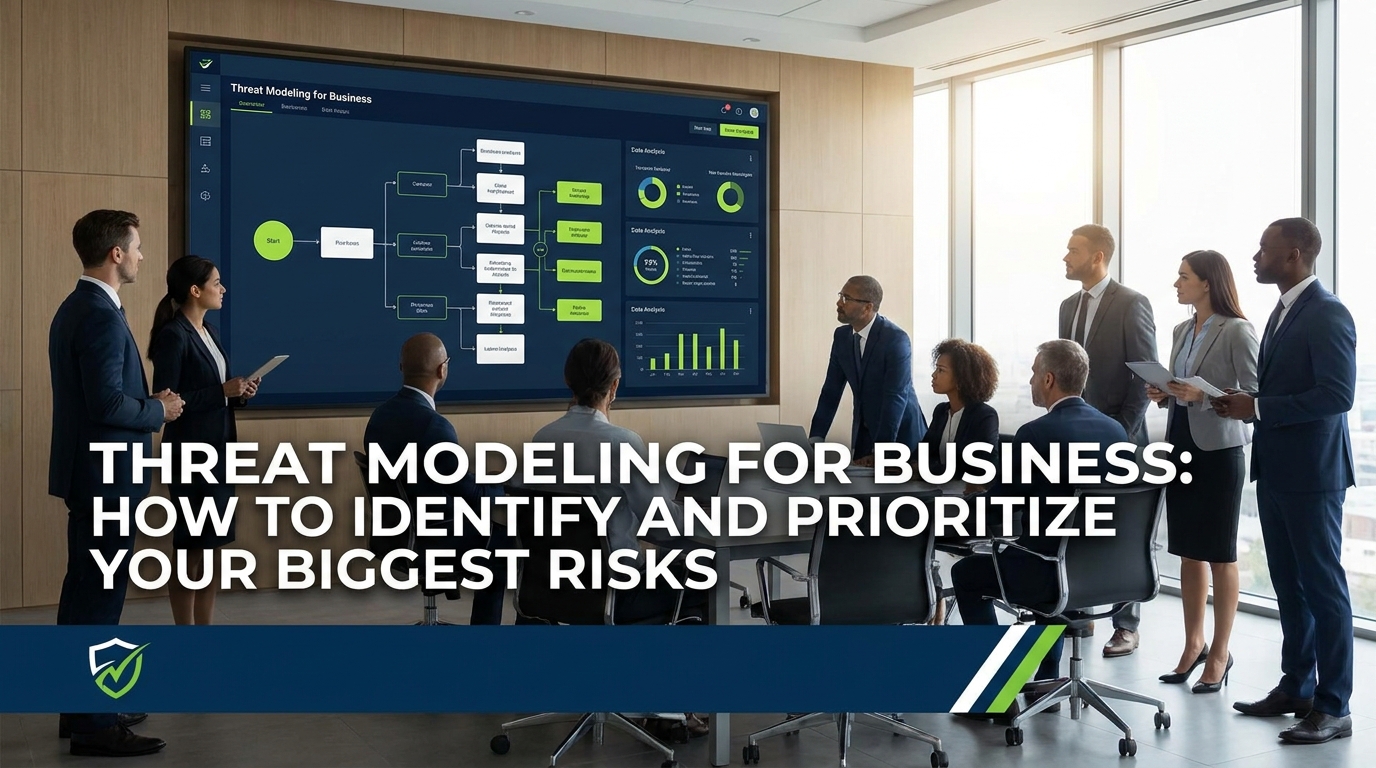










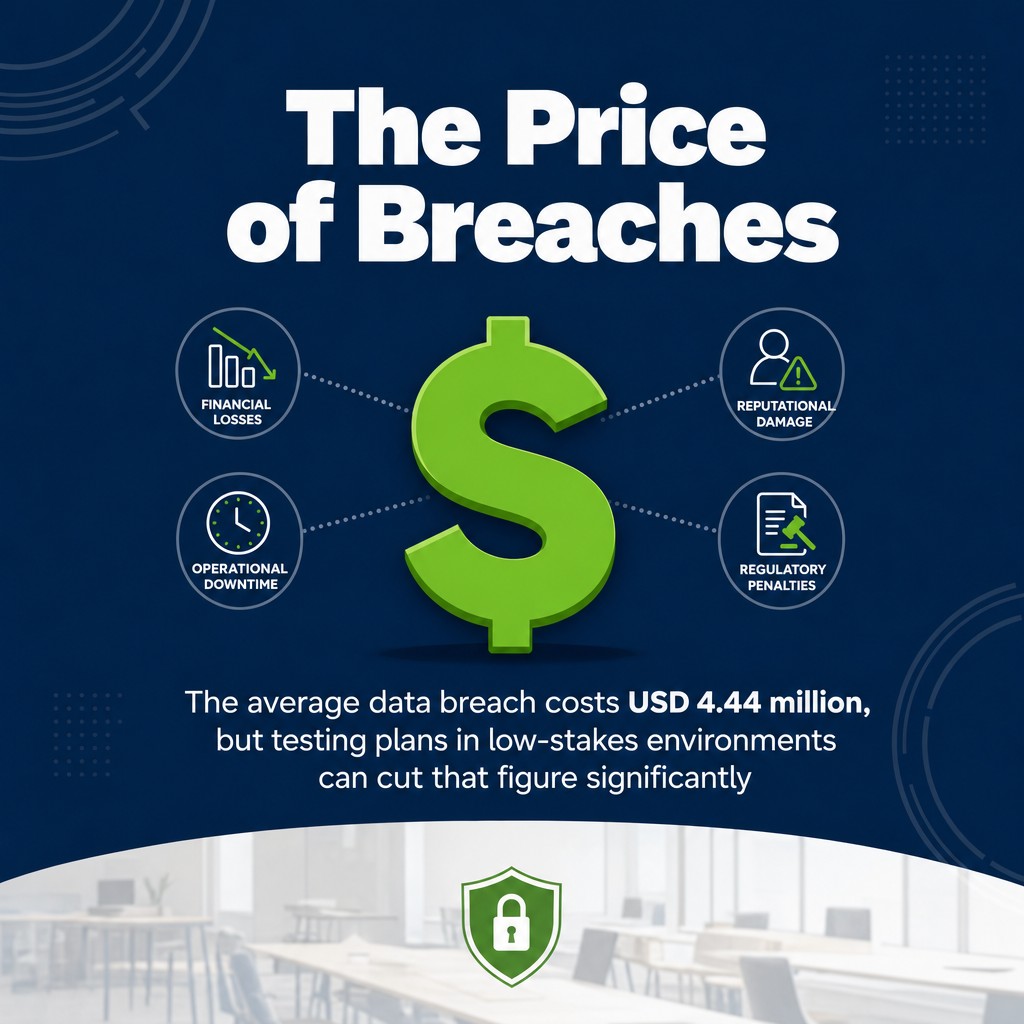
A cybersecurity tabletop exercise is a discussion-based simulation where cross-functional teams walk through their response to realistic cyber incidents without touching actual systems. Ransomware, data breach, and business email compromise scenarios are the most effective starting points for small and mid-sized enterprises. Running one quarterly with your IT team, legal counsel, PR lead, and executives will uncover coordination gaps before a real attack forces you to learn them the hard way. The average data breach costs USD 4.44 million, but most organizations could cut that figure significantly by testing their plans in a low-stakes environment first.
Most business owners think they have an incident response plan until they need it. You’ve got documentation somewhere. Your IT team knows what to do. Your insurance policy lists out steps.
Then ransomware hits at 3 AM on a Friday, and you realize nobody’s actually sure who calls the shots, whether to pay, or how to tell clients their data might be compromised.
That realization costs companies an average of six months in detection time and millions in containment. Tabletop exercises exist to surface those gaps when the stakes are zero and the learning curve is steep. No systems get touched. No real data gets compromised. Just your leadership team, a realistic scenario, and a facilitator asking the questions that separate theoretical plans from actual preparedness.
What Makes a Tabletop Exercise Different from Other Security Training
A tabletop exercise simulates a cyber incident through structured discussion rather than technical execution. Your team sits around a table and talks through what they would do if ransomware locked your systems right now.
No keyboards. No network access. Just decision-making under pressure.
The facilitator presents a scenario in stages, revealing new complications as the exercise progresses. Your finance director discovers the backup server is encrypted too. Your PR lead gets a media inquiry while you’re still assessing the damage. Your legal counsel needs to know if customer payment data was accessed so they can calculate notification requirements.
Each twist tests whether your incident response plan actually holds up when multiple departments need to coordinate in real time.
Why Discussion-Based Beats Technical Drills
Technical exercises have their place. Penetration testing finds vulnerabilities. Red team engagements test your detection capabilities. But neither one reveals whether your CEO knows how to authorize emergency spending at 2 AM or whether your communications team can draft a breach notification that won’t tank your stock price.
Tabletop exercises focus on the human layer. The decisions get made. The communication flows. The authority gets exercised.
A scenario might take 90 minutes to two hours. You’ll spend most of that time debating who has authority to take systems offline, whether to involve law enforcement immediately, and how to keep operations running while half your infrastructure is compromised.
Those debates expose gaps your technical controls can’t fix.
What Happens During the Simulation
The facilitator starts with a realistic scenario tailored to your industry. Ransomware affects approximately 72.7% of organizations and doubles in frequency yearly, making it the most common starting point for small and mid-sized businesses.

Stage one might be simple. Your help desk reports widespread system slowdowns and locked files displaying a ransom note.
Teams discuss their immediate response. IT wants to isolate affected systems. Legal wants to know if this triggers regulatory reporting. Finance asks about cyber insurance coverage. Your CEO needs to know if you can process payroll tomorrow.
The facilitator captures gaps in real time. Nobody knows the insurance policy number. Your incident response plan doesn’t specify who authorizes payments over $50,000. Legal and PR haven’t agreed on external communication protocols.
Stage two introduces complications. The ransom note threatens to publish customer data in 48 hours. Your payment processor just called asking why transactions aren’t clearing. A journalist left a voicemail asking for comment.
Now the exercise tests coordination under cascading pressure. Can your teams make decisions quickly enough to contain damage while maintaining accurate records for insurance claims and regulatory compliance?
The Stakeholders Who Need to Be in the Room
Most tabletop exercises fail because the wrong people attend. You need decision-makers, not note-takers. The people who can authorize spending, approve external communications, and make judgment calls about business continuity in the middle of a crisis.
Your IT team needs representation, but the CTO or IT director should attend rather than junior technicians. They’re the ones who decide whether to take production systems offline or attempt live remediation.
Legal counsel must participate. They determine notification timelines, regulatory reporting requirements, and whether to involve law enforcement. If your general counsel can’t attend, bring the person who handles data privacy and breach response.
Executive Leadership Sets the Tone
Your CEO or managing director should attend at least two tabletop exercises per year. Their presence signals that incident response is a business priority, not just an IT problem. More importantly, they need to understand the trade-offs between business continuity and security containment.
Finance or accounting leadership must participate. They control emergency spending, insurance claims, and financial impact assessment. A ransomware scenario that locks your accounting system will force them to make real-time decisions about payment processing and cash flow.
Your communications or PR lead handles external messaging. They need to practice drafting breach notifications, coordinating with legal on timing, and managing media inquiries while facts are still emerging.
Why Cross-Functional Teams Outperform Siloed Response
The coordination gaps between departments cause more damage than the actual attack. IT wants to shut everything down to contain the breach. Finance needs payroll to run. Sales is screaming about a pipeline deal closing tomorrow. Legal is calculating notification deadlines. PR is fielding customer calls.
Tabletop exercises force those competing priorities into the same room. You learn which decisions can be made independently and which require cross-functional agreement. You identify who has final authority when departments disagree.
The exercise should include at least one representative from each department that would be affected by a major cyber incident. For most small and mid-sized businesses, that’s IT, legal, finance, operations, and communications.
Bring in your cyber insurance broker if you have one. They can clarify coverage requirements and claim procedures during the exercise, which prevents expensive mistakes during an actual incident.
Building Scenarios That Actually Test Your Defenses
Generic scenarios produce generic learning. Your tabletop exercise needs to target the specific threats your business faces and the specific gaps in your current response capability.
Business email compromise resulted in USD 6.7 billion in global losses, making it one of the highest-impact scenarios for organizations that process vendor payments or wire transfers.

Start with a threat assessment. What attack vectors are most likely to succeed against your current security posture? If your employees handle sensitive customer data via email, a phishing scenario that leads to data exfiltration makes sense. If you run critical infrastructure, test a scenario where operational technology gets compromised.
Ransomware Scenarios Test Business Continuity
A ransomware scenario should progress through multiple decision points. Initial detection and containment. Impact assessment. Ransom negotiation considerations. Recovery planning. Customer notification. Insurance claim filing.
Make it realistic. Your backups might be encrypted too. Your offline documentation might be stored on the same network that’s compromised. Your cyber insurance might require law enforcement notification before they’ll consider covering the ransom payment.
Each complication tests whether your team has thought through contingencies or whether they’re making it up as they go.
A strong ransomware scenario includes timing pressure. The attackers set a 48-hour deadline. Your recovery team estimates five days to rebuild systems from backups. Your legal team needs 72 hours to complete breach notification requirements. Your finance team has a payroll run scheduled in 36 hours.
Those conflicts force prioritization decisions that reveal gaps in your incident response plan.
Data Breach Scenarios Expose Communication Gaps
A data breach scenario starts with discovery. Your security team detects unusual database queries. Investigation reveals an attacker has had access to customer records for three months.
Now your team faces cascading decisions. What data was accessed? Which customers need notification? What regulatory reporting applies? How do you communicate with affected parties without creating legal liability? When do you inform your board? What do you tell employees who are fielding customer questions?
80% of phishing campaigns target cloud services credential theft, making compromised employee accounts the most common initial access vector.
The scenario should test coordination between legal, IT, and communications. IT needs to determine the scope of the breach. Legal needs to calculate notification deadlines based on applicable regulations. Communications needs to draft notifications that satisfy legal requirements while maintaining customer trust.
Most teams discover their incident response plan doesn’t specify who has final approval authority for external communications. That gap causes delays that can turn a manageable breach into a regulatory violation.
Insider Threat Scenarios Test Trust and Verification
An insider threat scenario introduces different dynamics. Your IT team reports that a recently departed employee still has active VPN access. Security logs show they’ve been accessing customer files and downloading large datasets.
This scenario tests your ability to respond to human-driven threats rather than automated attacks. Who has authority to revoke access? How quickly can you terminate credentials across all systems? Do you involve law enforcement immediately or gather more evidence first? How do you notify affected customers about a deliberate data theft versus an accidental exposure?
The exercise reveals whether your offboarding procedures actually work and whether your team knows how to escalate suspicious behavior before it becomes a breach.
The Step-by-Step Process for Running Your First Exercise
Running a tabletop exercise requires more planning than execution. The actual simulation might last two hours, but effective exercises need several weeks of preparation to ensure scenarios are realistic and objectives are clear.
Start by defining your objectives. Are you testing your incident response plan for gaps? Training new executives on their crisis management roles? Validating that recent security improvements actually work under pressure? Your objectives determine which scenario you choose and who needs to attend.
Pre-Exercise Planning and Preparation
Schedule the exercise at least four weeks out. You need time to build a realistic scenario, brief participants, and coordinate calendars for busy executives. Block two to three hours for the actual exercise, plus 30 minutes for immediate debrief.
Choose a facilitator who understands both cybersecurity and your business operations. They need to present the scenario, introduce complications at the right pace, and capture gaps without derailing the discussion. External consultants bring objectivity, but internal security leaders who understand your environment can tailor scenarios more precisely.
Develop your scenario with specific injects. An inject is a new piece of information introduced during the exercise. “Your payment processor just called” is an inject. “A journalist left a voicemail” is an inject. Plan five to eight injects that escalate pressure and test different aspects of your response capability.
Brief participants one week before the exercise. Send them the scenario overview, expected outcomes, and which roles they’ll be playing. Don’t reveal the specific injects. You want them prepared but not rehearsed.
Running the Exercise in Real Time
Start by establishing ground rules. This is a no-fault learning environment. Questions are encouraged. Nobody’s performance is being evaluated. The goal is to find gaps in the plan, not gaps in people.
Present the initial scenario in writing. Give participants five minutes to read and process before discussion starts. This prevents the loudest voice from immediately driving the conversation.
The facilitator introduces each inject and asks specific questions. “Your backup server is also encrypted. What’s your next move?” Don’t accept general answers. Push for specific decisions. Who makes the call? What’s the authority threshold? Where is that documented?
Capture gaps in real time on a whiteboard or shared document. “No documented process for emergency vendor engagement” is a gap. “Unclear escalation path for after-hours incidents” is a gap. “Legal and PR haven’t agreed on notification language” is a gap.
These documented gaps become your action items.
The Debrief Makes or Breaks Value
Run a hot debrief immediately after the scenario concludes. Ask each participant what surprised them, what worked well, and what needs immediate attention. Capture these observations while they’re fresh.
Schedule a formal debrief within one week. Review the documented gaps, assign ownership for each item, and set deadlines for remediation. A gap without an owner and a deadline doesn’t get fixed.
Your incident response plan should be updated within two weeks of the exercise. The changes should directly address gaps identified during the simulation. If your plan doesn’t change after a tabletop exercise, you either ran the wrong scenario or you’re not being honest about the gaps.
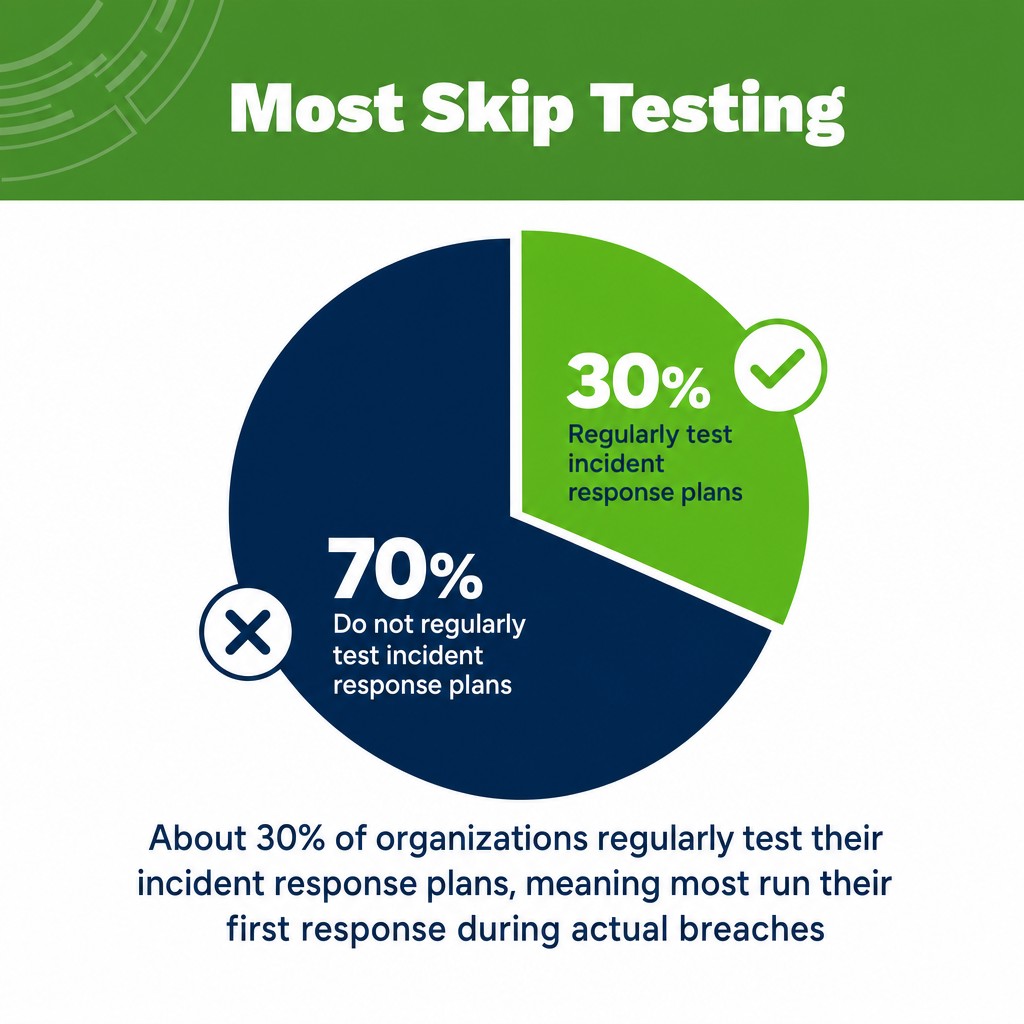
About 30% of organizations regularly test their incident response plans, which means most companies are running their first real incident response during an actual breach.
How Long Should Your Exercise Actually Last
Most effective tabletop exercises run between 90 minutes and two hours. Shorter exercises don’t create enough pressure to reveal meaningful gaps. Longer exercises lose focus as participants get fatigued and discussion becomes repetitive.
The scenario itself might span several days or weeks of simulated time, but you’re compressing that timeline into a two-hour discussion. The facilitator controls pacing by introducing injects at strategic intervals.
Timing Your Injects for Maximum Learning
Space major injects 15 to 20 minutes apart. That gives teams enough time to discuss implications and make decisions before new complications arrive. Too many injects too quickly overwhelms participants and creates artificial chaos rather than realistic pressure.
Use the first 30 minutes for initial response and containment decisions. This establishes baseline coordination and reveals immediate gaps in detection, escalation, and initial response.
The middle hour should introduce cascading complications. External stakeholder pressure. Timeline conflicts. Resource constraints. These injects test whether initial decisions hold up under changing conditions.
The final 30 minutes should focus on recovery and communication decisions. By this point, teams have made their containment choices and need to shift toward business continuity and stakeholder management.
When to Run Multiple Sessions
Complex organizations might need to run the same scenario twice. A technical session with IT, security, and operations teams can focus on containment and recovery. An executive session with leadership, legal, and communications can focus on business decisions and external stakeholder management.
Running separate sessions allows each group to go deeper on their specific decision points without getting bogged down in areas outside their expertise. Bring findings from both sessions together in a joint debrief to identify handoff points and coordination requirements.
Some organizations run quarterly exercises with different scenarios. One quarter tests ransomware response. The next tests data breach notification. The third tests supply chain compromise. The fourth tests insider threat.
Rotating scenarios ensures you’re testing different aspects of your incident response plan and preventing teams from getting too comfortable with a single threat model.
What Success Actually Looks Like
A successful tabletop exercise makes you uncomfortable. If everyone leaves feeling confident about your current preparedness, the scenario wasn’t hard enough or participants weren’t being honest about gaps.
You should finish the exercise with 10 to 20 documented gaps. Some will be minor documentation issues. Others will be fundamental coordination problems that require policy changes or new technology investments.
Measuring Immediate Outcomes
Count the gaps identified per stakeholder group. If IT identified eight gaps but legal only found one, your legal counsel either wasn’t engaged or the scenario didn’t put enough pressure on compliance and regulatory decision-making.
Track how many decisions required escalation because authority wasn’t clearly defined. These escalation points represent bottlenecks that will slow your response during a real incident.
Measure how long it took teams to make critical decisions. Did you spend 20 minutes debating whether to notify customers while the simulated breach continued to spread? That delay would be catastrophic during a real incident.
Breaches with a lifecycle longer than 200 days cost USD 5.01 million on average, making rapid detection and response the most important cost-control factor.

Long-Term Preparedness Indicators
Run the same scenario six months after implementing your gap remediation. Decision-making should be faster, escalation points should be clearer, and coordination should be smoother. If it’s not, your remediation didn’t address the root problems.
Track whether your incident response plan gets updated after each exercise. Plans that sit unchanged for a year aren’t being tested effectively. Living documents evolve as threats change and organizational capabilities mature.
Measure participation breadth. Are you getting the same four people in every exercise or are you rotating stakeholders to ensure knowledge is distributed across your organization? Concentrated knowledge creates single points of failure.
The best long-term indicator is whether tabletop exercises become routine rather than exceptional. Organizations that run quarterly exercises treat them like fire drills. Necessary. Expected. Valuable.
Common Mistakes That Waste Everyone’s Time
The worst tabletop exercises focus on technical problems your IT team can solve independently. “The firewall is blocking traffic” isn’t a useful scenario for cross-functional leadership. It’s a help desk ticket.
Scenarios need to force coordination across departments and test decisions that don’t have obvious technical solutions. Should you pay the ransom? How do you maintain customer trust during a multi-day outage? When do you notify regulators about a breach you’re still investigating?
Avoiding the “It Wouldn’t Happen to Us” Trap
Participants who dismiss scenarios as unrealistic aren’t engaging honestly. Every scenario is realistic if the facilitator built it from actual threat intelligence. Pushing back on premise derails learning.
Set ground rules at the start. Scenarios are based on real incidents that happened to organizations similar to yours. Suspend disbelief and engage with the decision-making process.
If participants keep saying “our systems would have caught that,” your scenario isn’t presenting enough complications. Add injects that specifically bypass their assumed controls. “Your EDR system was disabled by the attacker” is a valid inject that forces teams to operate without their preferred security blankets.
The Note-Taker Problem
Sending junior staff to “take notes” instead of decision-makers destroys the exercise value. You’re testing whether leadership can coordinate under pressure, not whether your team can document theoretical responses.
If a key stakeholder can’t attend, reschedule. A tabletop exercise with the wrong participants is worse than no exercise at all because it creates false confidence in capabilities that haven’t actually been tested.
When Exercises Become Theater
Some organizations run tabletop exercises to check a compliance box rather than find genuine gaps. The scenario is scripted. Responses are rehearsed. Everyone knows their lines.
That’s security theater, not security preparedness.
Effective exercises create genuine uncertainty. Participants shouldn’t know what’s coming next. The facilitator should introduce complications that force teams to question their assumptions and adapt their responses in real time.
If your team finishes the exercise confident they got everything right, the facilitator didn’t push hard enough.
Resources That Make Exercise Planning Easier
CISA provides free tabletop exercise packages tailored to different sectors and threat scenarios. These packages include facilitator guides, participant handbooks, and situation manuals that walk you through scenario development and exercise execution.
The packages are designed for organizations without dedicated exercise planning teams. You can download a ransomware scenario, customize it for your environment, and run an exercise within two weeks.
Scenario Templates Worth Using
CISA’s ransomware exercise package includes a realistic scenario based on actual ransomware campaigns. It provides specific injects, timing recommendations, and discussion prompts that keep the exercise focused on decision-making rather than technical troubleshooting.
Their data breach scenario tests notification requirements under multiple regulatory frameworks. It’s particularly useful for organizations that operate across state lines or handle health or financial data subject to specific breach notification rules.
The cybersecurity risk assessment you’ve already completed should inform which scenarios matter most. If your assessment identified phishing as your highest-risk attack vector, run a phishing scenario that escalates to credential theft and lateral movement.
Building Your Own Custom Scenarios
Generic scenarios miss organization-specific risks. A manufacturing company needs scenarios that test operational technology compromise. A healthcare provider needs scenarios that test HIPAA breach notification under active patient care conditions. A law firm needs scenarios that test client confidentiality during data exfiltration.
Start with a real incident report from your industry. The HHS breach portal publishes details of major healthcare breaches. Financial regulators publish enforcement actions. Trade publications report on supply chain compromises.
Take the facts from a real incident and adapt them to your environment. Change names and specifics, but keep the decision points and complications. Real incidents provide realistic pressure because they actually happened to someone.
Your cyber risk management strategy should integrate tabletop exercises as a regular testing mechanism, not a one-time event.
Making Sure Your Next Exercise Isn’t Your Last
Most organizations run one tabletop exercise and never do it again. The exercise surfaces gaps, teams get busy, and the documented improvements never happen. Six months later, the same gaps still exist.
Schedule your next exercise before you finish the current one. Put it on the calendar. Block executive time. Assign a different scenario.
Routine beats intensity. Four focused 90-minute exercises per year will improve your preparedness more than one annual all-day event that everyone dreads and nobody wants to repeat.
Rotate facilitators and scenarios. Different facilitators notice different gaps. Different scenarios test different response capabilities. Variety prevents teams from getting comfortable and ensures you’re testing the full range of your incident response plan.
Track improvements between exercises. Did your decision-making speed increase? Are escalation paths clearer? Did you eliminate the coordination gaps identified in the previous exercise? Measurement drives improvement.
CISA conducted 148 cyber and physical security exercises in 2025, demonstrating that even government agencies with mature security programs continue regular tabletop training.
The organizations that handle breaches best aren’t the ones with perfect security. They’re the ones who’ve practiced responding to imperfect situations enough times that coordination becomes automatic.
Your incident response plan is only as good as your team’s ability to execute it under pressure. Tabletop exercises are the lowest-cost, lowest-risk way to find out if your plan actually works.
Run one this quarter. Document the gaps. Fix them. Run another next quarter. That rhythm builds the muscle memory that turns a theoretical plan into a practiced capability.